From numbers to better decisions, part 1/3: Automation is the starting point, not the destination
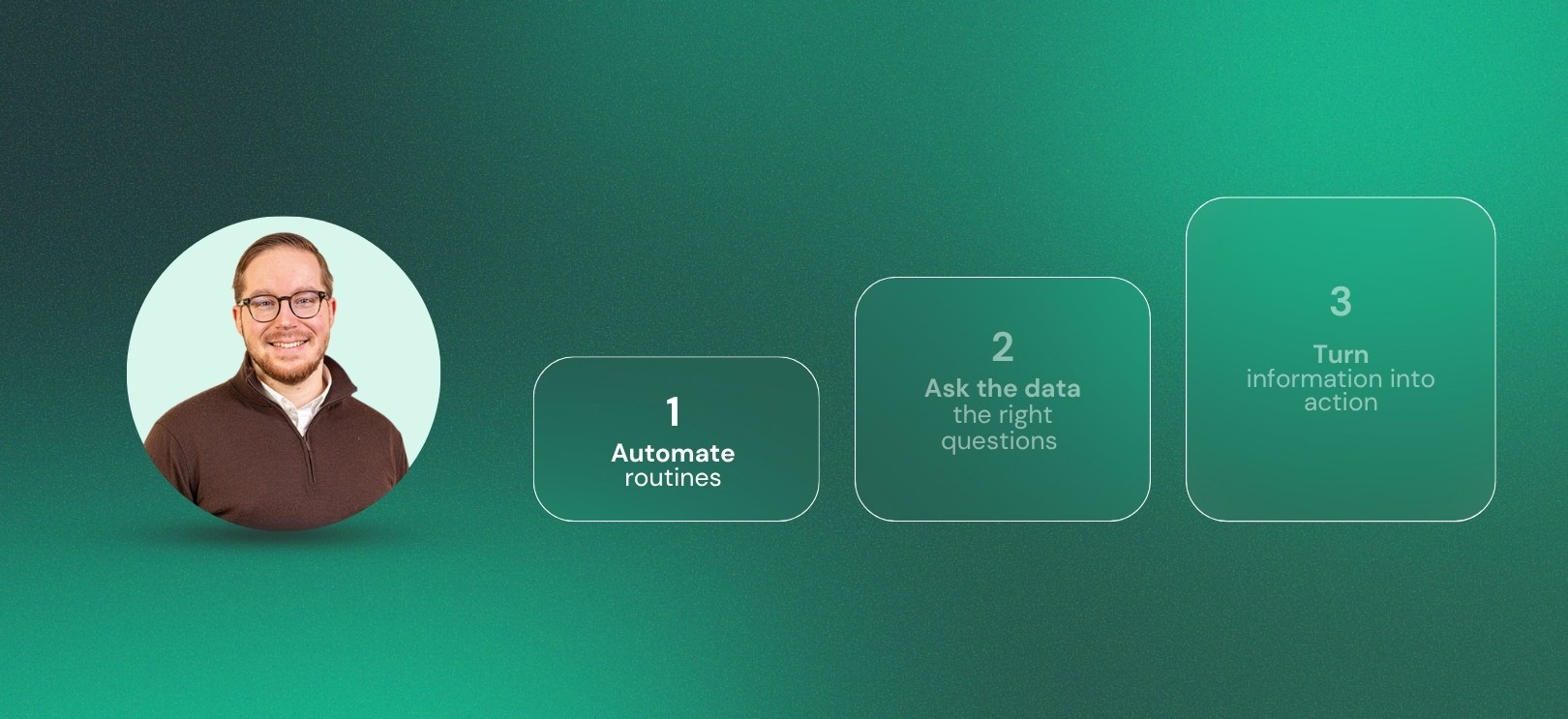
This article is part of a three-part series, From Numbers to Better Decisions. In the series, our expert Pyry Lamminen explores how SMEs can genuinely harness data and make better-informed decisions.
Data volumes keep growing — but does that lead to better decisions?
Collecting data has never been easier, yet the sheer volume of it is increasingly making it harder to identify what actually matters and put it to use in decision-making.
Many business leaders will recognise this situation: there are countless reports, spreadsheets, and systems all around them, but no clear overall picture. Analytics tends to remain at the level of one-off analyses or disconnected experiments. Time goes into reporting, checking, and manual updates — and yet the feeling persists:
“We have plenty of numbers, but we still can’t see where we’re headed.”
Real value emerges in day-to-day management, when data translates into clear insights that point the way forward.
What leadership actually needs isn’t more graphs or tables. What they value are holistic insights:
- What do the numbers tell us about the future?
- Which direction should the company take?
- What decisions need to be made right now?
What does automation actually bring to the table?
AI and automation are on everyone’s lips these days — and for good reason. Their impact on everyday business operations keeps growing. But automation isn’t just a technical upgrade; it enables an entirely new way of looking at and leveraging company data.
When reporting is automated, the business gains a number of tangible benefits:
- The volume of manual work drops significantly, freeing up staff time for higher-value tasks. No more hours spent wrangling spreadsheets: automation handles the routine work for you.
- The risk of errors decreases, as data flows between systems automatically. Human mistakes become a thing of the past, and data stays current and reliable.
- Operational grind gives way to time for analysis and development. When day-to-day tasks no longer consume all your attention, you can focus on business planning and making bold, data-driven decisions.
The danger lurks in broken processes
What often gets overlooked is that adopting automation also requires a hard look at, and improvement of, your underlying processes. If you automate a bad process, you just get bad results faster.
That’s why automation is the beginning of the journey, not the end goal. It creates the opportunity to move beyond data collection and reporting and into planning and decision-making, where data becomes genuine understanding and the foundation for confident choices.
The old saying “well planned is half done” rings especially true when it comes to automation: once reporting works quietly and reliably in the background, the business can turn its gaze toward the future and make better decisions, not merely based on numbers, but grounded in real insight.
Next up: What happens beyond the dashboard — and why data alone is never enough?
Takeaway: The volume of data alone doesn’t solve leadership challenges. What matters is the ability to turn information into insight. Automation frees up time from manual reporting and reduces errors, but the real benefit only emerges when processes are sound and data actively supports decision-making.
Automation is a means, not an end, it’s what makes it possible to move from shuffling numbers to forward-looking, knowledge-driven leadership.