From numbers to better decisions, part 2/3: decision-making starts beyond the dashboard
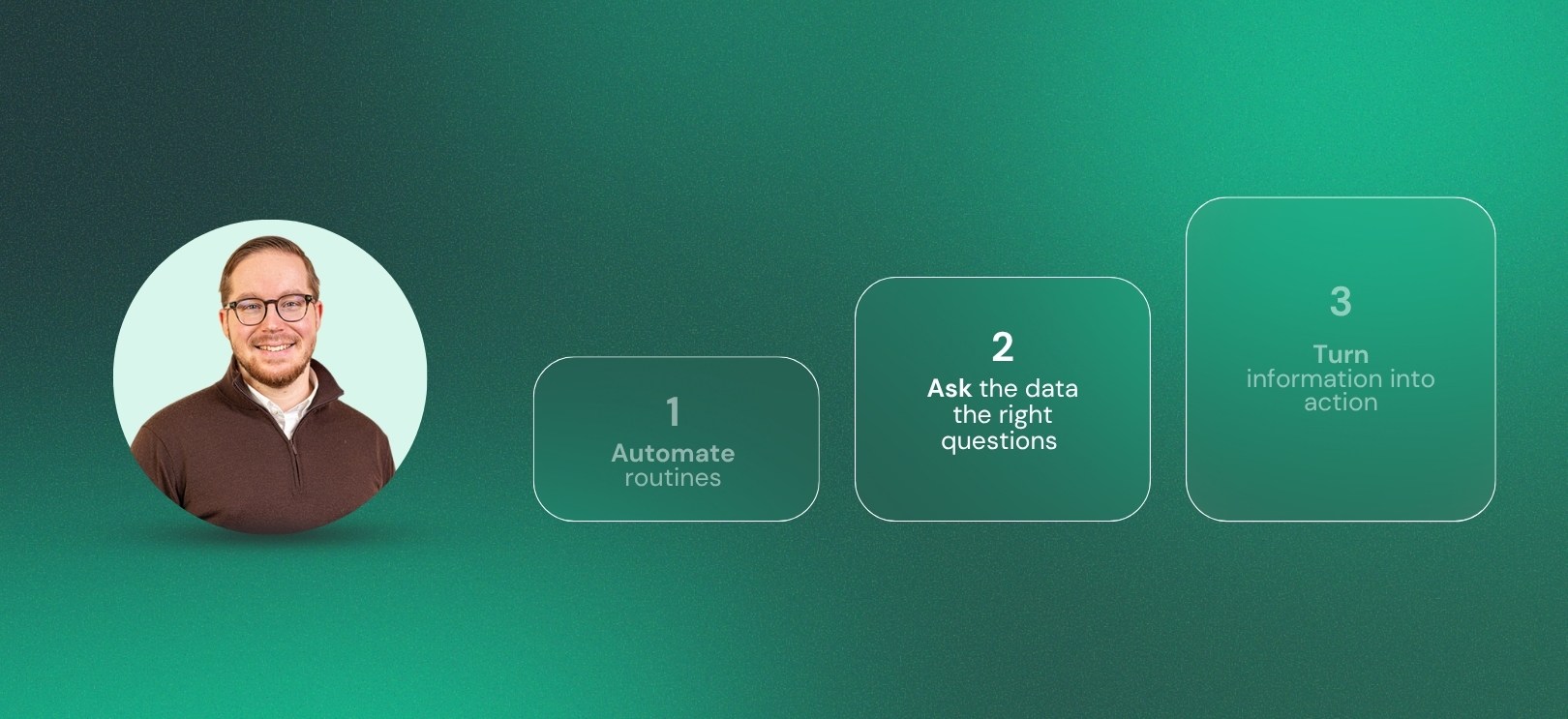
This article is part of the three-part series From Numbers to Better Decisions. In the previous instalment, our expert Pyry Lamminen explained why automation is the starting point, not the destination. In this part, we move to the next level: what happens beyond the dashboard?
The dashboard is just the beginning
Many organisations already have polished dashboards and BI views that surface information clearly and help make sense of the big picture. These tools are undeniably useful. They provide a clear view of what has been happening and how different parts of the business are performing.
Even so, it’s worth keeping in mind that a chart or a visual display is never the final goal in itself. The real objective is the decision-making that flows from these views and the information they provide.
A dashboard functions as a snapshot of the business; it shows what has happened and where things stand right now. But the genuine value only materialises when that data is used as the basis for what comes next — when it prompts the question: what do we do from here?
Reporting and visualisations don’t solve problems on their own. They open up the conversation and steer you toward concrete decisions and action.
Planning isn’t a once-a-year exercise
For SMEs, planning shouldn’t be treated as an annual budgeting ritual. At its best, it’s a continuous process of shaping the business architecture, running experiments, building scenarios, and reallocating resources as circumstances change.
Technology plays a significant role today, but it doesn’t replace human judgment and contextual understanding. AI and advanced analytics can help identify hidden trends, anomalies, and emerging opportunities that traditional reporting might never surface. AI can provide direction, support forecasting, and help construct different future scenarios, but the final call still requires a human being who can read context and make considered choices.
“What if?” — the right questions drive progress
A good leader doesn’t stop at reviewing the numbers. They dare to ask uncomfortable questions and challenge prevailing assumptions. The most important questions are rarely straightforward — they tend to revolve around alternatives and possible paths forward:
- “What if X declines — how does that affect Y?”
- “What if the market turns?”
- “What if we invest now — what does that do to cash flow in six months?”
This is precisely the territory of decision-making analytics, or Decision Intelligence. It’s about moving beyond simply reporting on data to actively using it in support of decisions. Data, technology, and human judgment work together, and the business becomes capable of making better, more grounded decisions even when the future is uncertain.
A good question is already half the answer
Many organisations talk about phenomena (“customer profitability,” “workforce capacity”), development themes, and strategic goals, but forget the most important thing: what specific question are we actually trying to answer?
Without clear questions, analytics is just a sea of numbers. The difference looks like this:
- Vague: “We want to track profitability.”
- Focused: “Which customer segments are the most profitable, and how can we steer sales toward them?”
When the question is clear, it becomes much easier to direct analytics in support of a decision: what data is needed, how it should be presented, and what kind of choice it makes possible.
Takeaways:
- A dashboard tells you what happened yesterday. Not what you should do tomorrow.
- A budget meeting once a year isn’t enough, good planning is continuous.
- AI is a useful tool but a poor master. The final word belongs to people.
- The best question isn’t “how did we do?” but “what if?”
- When numbers, tools, and your own judgment work together, that’s when real decisions get made.