SFDR 2.0: Europe’s Sustainable Finance Disclosure Rules Are Being Rewritten

The European Commission’s November 2025 proposal marks the most significant overhaul of the EU’s sustainable finance disclosure framework since it took effect in 2021. Fund managers face a binding deadline to restructure how their products are classified, disclosed, and marketed.
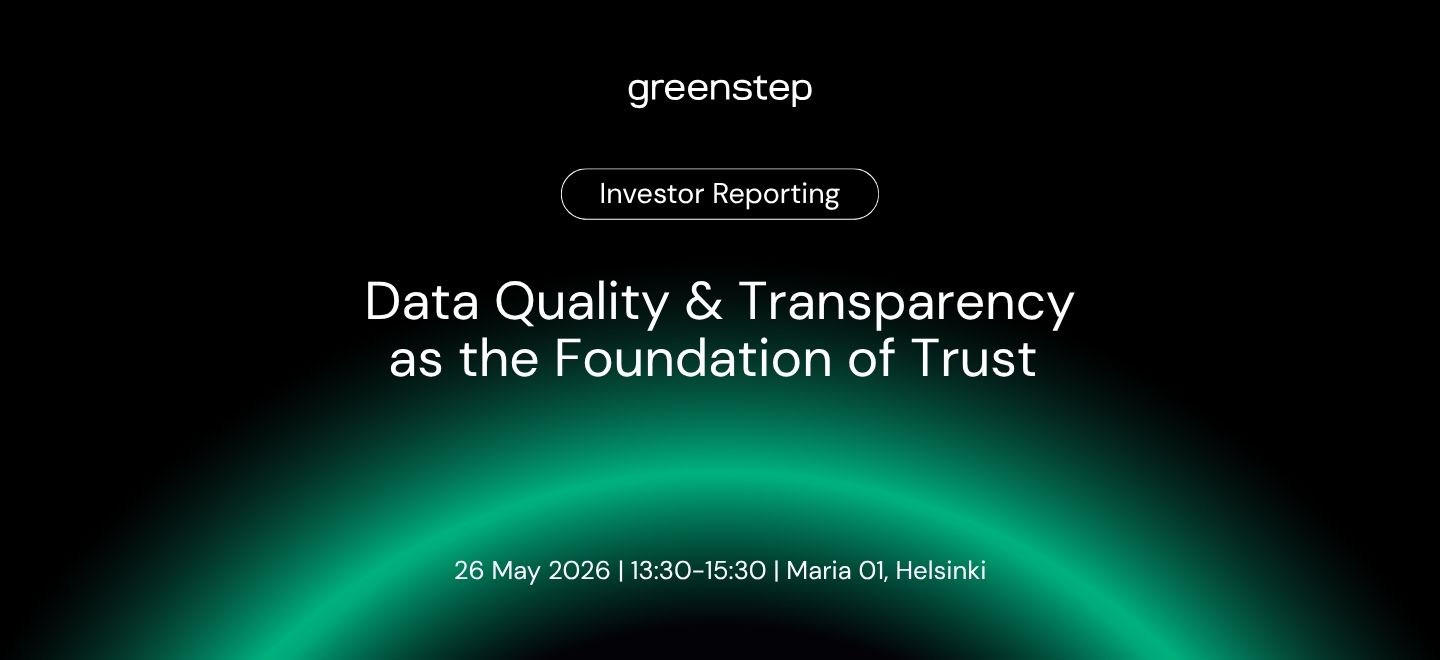
Join us for a deeper discussion as we explore what this means in practice at the upcoming event for fund managers on 26 May. Learn more.
The Sustainable Finance Disclosure Regulation, which entered into application in March 2021, was designed to bring transparency to how financial products integrate environmental and social considerations.
In practice, however, it has led to something different: an unofficial labelling system built around Articles 6, 8 and 9. This framework was never envisioned by the European Commission and has since attracted sustained criticism for its complexity, inconsistent application, and lack of clarity.
On 20 November 2025, the Commission published its formal legislative proposal to replace the existing framework. The draft, now referred to as “SFDR 2.0”, is currently working through the EU legislative process. When finalised, it will require asset managers operating across the EU to reassess the classification, documentation, and marketing of virtually every fund in their portfolio.
The core change: from disclosure to categorisation
The most substantive shift proposed under SFDR 2.0 is structural. The existing tiered disclosure approach designates products under Articles 6, 8, or 9 based on how they integrate sustainability. This approach will be abolished and replaced with a formal product categorisation regime. Under the new framework, three distinct categories will exist, each with binding minimum investment thresholds and defined eligibility criteria.
| Article | Category | Threshold | Description |
| New Article 9 | Sustainable | 70% minimum | Assets invested toward a defined sustainability objective. |
| New Article 8 | Transition | 70% minimum | Assets in companies on a credible path toward sustainability. |
| New Article 7 | ESG basics | 70% minimum | Assets integrating ESG considerations beyond risk management. |
| New Article 6 | Uncategorized | — | Baseline risk disclosure only. No sustainability-related marketing permitted. |
Products that do not meet the criteria for any of the three categories may still disclose how sustainability risks are considered in investment decisions, as all products currently must under Article 6. However, they will be prohibited from using sustainability-related terminology in their names or promotional materials.
Key changes beyond the category structure
PRINCIPAL ADVERSE IMPACTS
Under current rules, financial market participants with more than 500 employees are required to publish entity-level statements on how their investment decisions affect sustainability factors: the Principal Adverse Impact, or PAI, statements under Article 4. SFDR 2.0 removes this entity-level requirement entirely. Product-level PAI disclosures, however, remain in place for funds falling within the new Article 7 and 9 categories.
DISCLOSURE FORMAT
One of the most consistent criticisms of the current framework has been the length and technical complexity of required disclosures. SFDR 2.0 introduces a hard cap: pre-contractual, website, and periodic disclosures for categorised products must not exceed two pages. The existing Regulatory Technical Standards, which underpin the current template-based disclosure system, will be repealed and replaced with a more flexible architecture tied to the new categories.
SCOPE CHANGES
SFDR 2.0 would remove portfolio management services and financial advisers providing investment advice from scope entirely. This is a significant change for wealth managers and advisory firms that are currently subject to the regime. Banks and investment firms providing portfolio management are also excluded under the proposal.
NO GRANDFATHERING CLAUSE
There is no transition relief for most existing products. Any fund currently operating under SFDR 1.0, regardless of whether it is classified Article 8 or Article 9, will need to comply with the new regime once it comes into force. The only exemption is for closed-ended funds that were created and distributed before SFDR 2.0 takes effect.
“Almost 50% of EU assets under management are designated Article 8 or Article 9, representing more than 60% of EU funds.” — European Commission, November 2025
The Commission estimates that roughly half of existing Article 9 funds would be able to meet the proposed 15% EU Taxonomy alignment threshold required for the new Sustainable category, suggesting significant reclassification pressure across the rest.
Timeline
| 20 Nov 2025 | European Commission publishes the SFDR 2.0 legislative proposal. |
| 2026 | European Parliament and Council review; trilogue negotiations expected to begin. |
| Late 2026 – Early 2027 | Final text anticipated; 18-month implementation period begins upon entry into force. |
| 2027 – 2028 | Commission-envisaged start-up phase; firms adapt product structures and documentation. |
| From 2028 | Full application of SFDR 2.0 for most in-scope financial products. |
| From Jan 2028 | Sponsors required to submit product information to the European Single Access Point. |
Implications for fund managers
The reclassification of existing products is likely to be the most immediate operational challenge. Fund managers will need to evaluate each product against the new category thresholds, update prospectuses and marketing materials, and assess whether products that currently carry an Article 8 or 9 designation can genuinely meet the new binding criteria. Products that do not qualify may move into the uncategorised tier and lose the ability to make sustainability-related claims.
The data infrastructure required to demonstrate ongoing compliance with quantitative investment thresholds is also a concern for many managers, particularly those with broad and geographically diverse portfolios. Meeting a 70% minimum threshold requires systematic, auditable ESG data at both the underlying company and fund level. For private markets and real assets, where such data is less standardised, the challenge is more acute.
The removal of entity-level PAI reporting will reduce some administrative burden, but product-level PAI obligations remain and will need to be integrated into fund-level disclosures for all categorised products.
Automating ESG and SFDR reporting
SFDR 2.0 increases the operational burden of ESG data management. Fund managers will need a consistent way to collect portfolio-company ESG inputs, validate them, and translate them into product-level reporting that can stand up to scrutiny as rules evolve through the EU legislative process.
To help meet these demands, Greenstep has expanded its technology capabilities through the acquisition of Rundit, a Nordic SaaS reporting platform used by private equity investors and fund managers. Rundit centralises financial and performance data from portfolio companies, making reporting more systematic for both funds and their investors.
Rundit also supports structured ESG data collection directly from portfolio companies, reducing reliance on manual spreadsheet rounds and fragmented email workflows. With data collected and validated in one place, fund teams can more easily monitor thresholds and compile the information needed for SFDR-aligned disclosures, including relevant PAI indicators, into standard reporting outputs.
Sources: European Commission SFDR 2.0 proposal (November 2025); Paul Hastings; Sidley Austin; Herbert Smith Freehills Kramer.
This article is for informational purposes only and does not constitute legal or regulatory advice.
The legislative process for SFDR 2.0 is ongoing, and the final text is subject to amendment by the European Parliament and Council. Fund managers should monitor developments closely and begin assessing their product portfolios against the proposed category criteria in advance of formal adoption.
We will be exploring these themes further at the upcoming event on 26 May in Helsinki, with a focus on how managers are preparing for potential reclassification, evolving disclosure requirements, and tighter expectations around ESG substantiation. Join us and discuss how peers across the market are approaching the transition from proposal to implementation. Register for the event here!