Investor Reporting Data Quality: What Fund Managers Can Improve
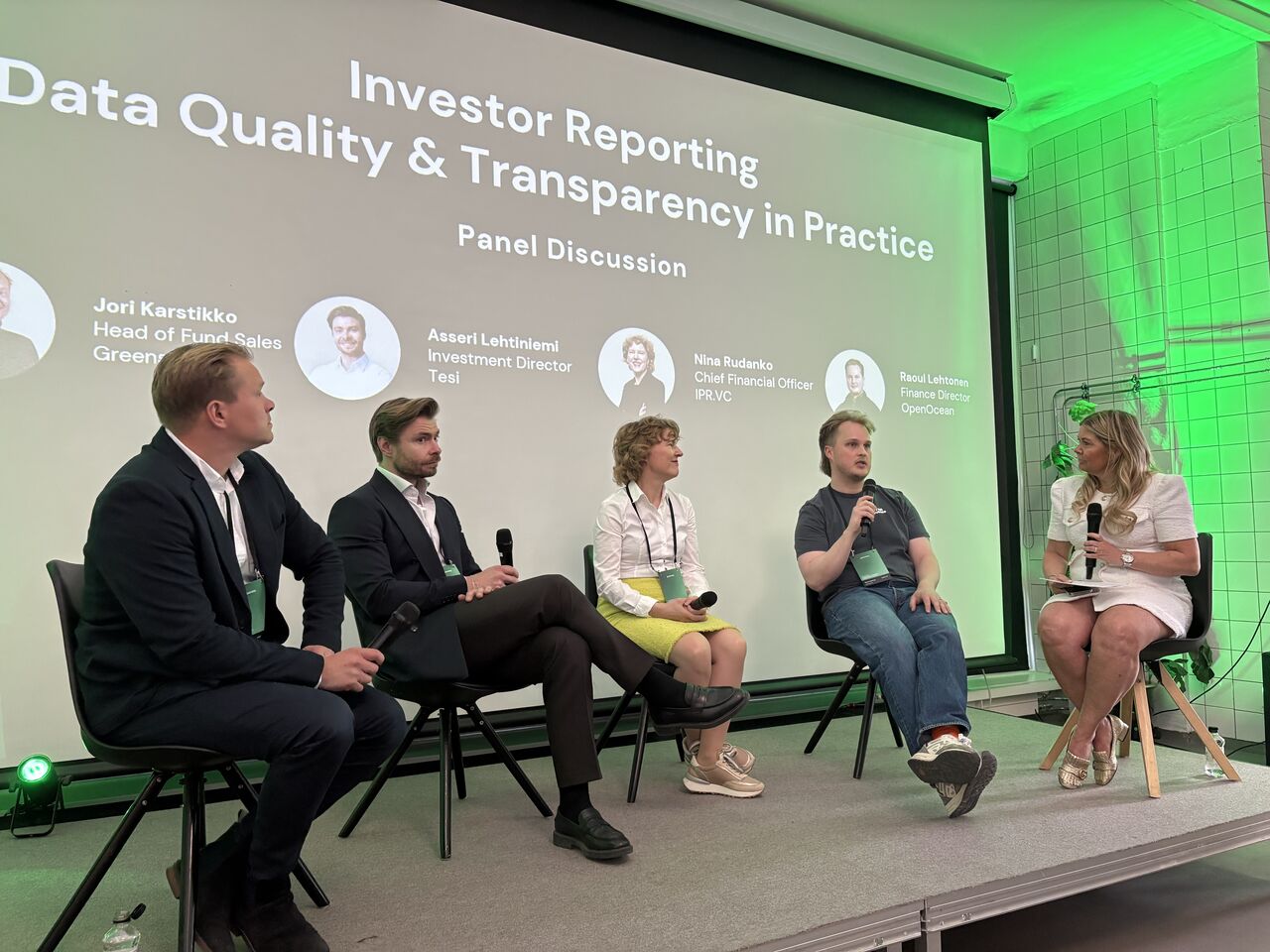
“If the same number doesn’t match across reports – it’s not a reporting issue, it’s a data problem.”
That line came from Greenstep’s Investor Reporting Event at Maria 01 in Helsinki on 26 May 2026. It stopped the room, because everyone in it recognised it. Fund managers, investors, and back-office professionals had gathered to discuss transparency and data quality in LP reporting. Within minutes, the conversation had moved past the report itself and upstream, to where the real problem sits.
Most funds spend their effort on the output: the quarterly PDF, the formatting, the narrative. The data that feeds it gets less attention. That is the wrong order of priorities.
Why does investor reporting data quality break down before the report is written?
The most common failure point is not poor analysis or weak writing. It is the data collection process that precedes both.
Most fund managers still gather KPI and financial data from portfolio companies by email, with spreadsheet templates that vary by company and change between quarters. When submissions arrive late, in inconsistent formats, or with gaps, the fund manager spends the first week of every reporting cycle chasing and reconciling, before any actual reporting work begins.
Platforms like Rundit replace that process with structured data requests sent directly to portfolio companies, with submissions flowing into a single platform rather than scattered across inboxes.
The result without this is not just slow reporting. It is reporting built on data that cannot fully be trusted. Methodology changes between quarters without documentation. Figures that appear in one report do not match figures in another. When a regulator or LP asks a follow-up question, the answer requires forensic work rather than a simple lookup.
This is the data problem. The report is its symptom.
What do LP investors actually look for when they open a fund report?
Investors receiving fund reports are looking for three things before anything else: consistency, completeness, and context.
Consistency means the same KPIs, measured the same way, from the same companies, every quarter. Any change in methodology or scope should be flagged explicitly and explained. Unexplained changes in how numbers are calculated generate more questions than they answer, and erode the trust that good reporting is meant to build.
Completeness means every portfolio company is represented with current data. Missing entries are noticed immediately. A placeholder, an estimate without documentation, or an absent company signals that the fund does not have full visibility into its own portfolio.
Context means the numbers are accompanied by enough narrative to be interpretable without a follow-up call. A KPI without commentary on what drove it (positive or negative) is harder to trust than one that explains itself.
These are not high standards. They are the baseline. The funds that consistently clear this bar are the ones that have systematised how data is collected, not just how reports are presented.
How are SFDR 2.0 and AIFMD 2.0 raising the stakes on data quality?
Regulatory pressure is making the data quality problem harder to ignore.
SFDR already requires Article 8 and Article 9 funds to report on principal adverse impact indicators with traceable, company-level data. Estimates and proxies are not acceptable for most indicators. SFDR 2.0, expected to enter force in 2028, goes further: it moves away from the current Article 6/8/9 classification framework toward new product categories that place much stronger emphasis on evidence. Less about what a fund declares, more about how it evidences its ESG claims with consistent, auditable data at portfolio company level.
AIFMD 2.0 came into force across all EEA member states on 16 April 2026. All AIFMs in scope must begin reporting under the new harmonised Annex IV template by 16 April 2027. The expanded scope adds human resources metrics, oversight evidence, and delegation disclosures, all of which require documented operational data that most funds do not currently collect systematically.
The direction is consistent across both frameworks. Regulators are not asking for more reports. They are asking for better evidence behind the data already being reported. That is only possible if the underlying collection process is rigorous.
Invest Europe’s reporting guidelines, which set the voluntary standard most European PE and VC funds align to, follow the same logic: consistent methodology, documented assumptions, and transparent treatment of estimates.
What does good investor reporting data infrastructure actually look like?
The difference between funds that report well and those that struggle is visible in their operating model, not their reporting templates.
Funds that report consistently well have standardised what they ask portfolio companies to report, defined the methodology for each KPI, and built a collection workflow that produces structured, timely submissions every quarter. They have reduced the number of manual steps between raw data and LP-facing output. And they treat ESG and financial data collection as a single process, not two separate workstreams run on different timelines.
The practical consequence is significant. When data lives in a system rather than in email threads and individual spreadsheets, the reporting cycle shortens, the outputs are more consistent, and LP questions can be answered quickly, sometimes the same day, rather than requiring a week of cross-referencing.
Greenstep’s Fund Business team works with fund managers across Europe to build the operational layer that investor reporting quality depends on: data governance, SFDR compliance support, AIFMD 2.0 reporting, and the fund accounting and administration workflows that determine whether reporting is accurate and timely. Combined with Rundit‘s portfolio data collection and LP reporting platform, the result is an integrated reporting capability that removes the manual overhead from both data collection and report generation.
Reporting quality is now a fundraising variable
LP expectations for reporting quality are structural, not cyclical. The combination of regulatory pressure from SFDR and AIFMD 2.0, voluntary standards from Invest Europe and ILPA, and rising LP sophistication means the minimum acceptable standard for fund reporting is higher than it was two years ago.
More directly: funds that report well retain LPs more effectively and raise subsequent funds faster. Reporting quality has become a re-up criterion, not a hygiene factor.
The fix starts upstream. Not with better templates, but with how data gets collected.
—
Greenstep’s Fund Business team supports fund managers across Europe with fund accounting, investor reporting, SFDR compliance, and back-office operations. Learn how we can support your fund.