Scale yourself, not just your team: lessons from CFO Bites
Scaling a company is no longer only about raising capital and hiring people. At CFO Bites: Slush Breakfast, finance leaders and investors agreed that the CFO’s real job in growth is to build the team, the processes and the capital strategy early, and then step into a more strategic role.
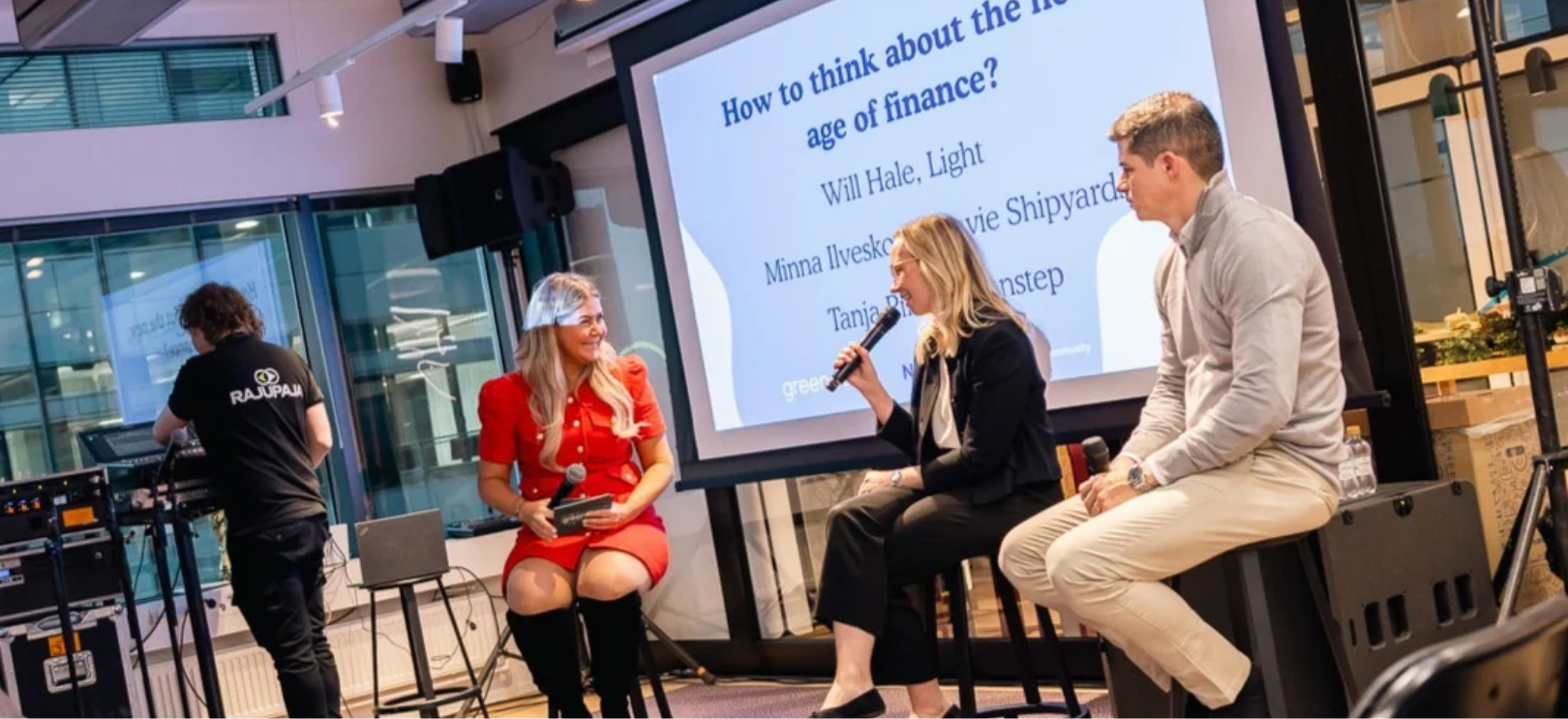
The breakfast gathered CFOs, finance leaders and growth investors at Sievo HQ in Helsinki on 17 November 2026. The event was co-organised by Greenstep, the Finnish Startup Community and Nordea and featured three fireside chats:
- Beyond the numbers: The strategic role of the CFO – Gerard Griffin, CFO of Supercell, in conversation with Olli Saksa, CFO of Sievo
- Financing the journey: Building capital strategies to sustainable growth – Andreas Helbig, Partner at Atomico, and Elie Hodara, Investment Manager at InfraVia Capital Partners, moderated by Vesa Riihimäki, Head of Startup & Growth Finland at Nordea
- How to think about the new age of finance? – Minna Ilveskoski, CFO of Davie Shipyards in Finland, and Will Hale, VP Global Sales at Light, moderated by Tanja Piha, Partner at Greenstep
Three different perspectives, a gaming company CFO, two investors and an industrial scale-up with an AI-native ERP provider, led to remarkably similar conclusions. People come first, preparation beats reaction, and technology should free finance teams for the work that only people can do.
Olli Saksa and Gerard Griffin
Beyond the numbers: the CFO behind the big bets
Supercell CFO Gerard Griffin and Sievo CFO Olli Saksa explored the strategic role of the CFO from several angles. Among other things, they discussed how to decide what to build, what to buy and whom to bet on – and why those decisions start with people, not spreadsheets.
Build, partner or buy? M&A for its own sake is a bad idea, Griffin warned, because buying is often easier than building. Start from your internal strengths and the capabilities you will need. If a missing capability is long-term and strategic, it is worth owning; partnering gives flexibility but leaves it outside your control. Supercell does all three: it builds games internally, has acquired teams such as Metacore, and uses work-for-hire partners where it can give up creative control.
Make the tough calls, then plan the integration. At Zynga, Griffin’s team shut down underperforming projects, including a whole floor dedicated to virtual reality, which left a gap in growth. With cash and a strong publishing capability, acquiring studios such as Helsinki-based Small Giant Games and Peak became the answer. Integration was light: finance was connected, but the teams kept their independence. For deeper integrations, Griffin advises putting the business leader who will own it on the deal team. Deals often fail when nobody plans what happens once the new team walks in the door.
Talk to the team before the numbers. In a recent due diligence meeting with a studio, Griffin did not look at the financials at all. He wanted to understand the team’s motivation. The biggest red flag is a team that just wants to cash out, because then no one is running the business on day two. Supercell’s M&A function is called the investments team, reflecting a long-term view: many early-stage investments will not pay back during Griffin’s time as CFO, and that is fine.
His view on AI was equally people-centred: it does a lot of impressive things, but it does not do empathy and it does not do common sense.
That same thinking shapes how he builds his own team. Asked what he looks for when hiring today, Griffin named three things: curiosity, common sense and no arrogance.
Andreas Helbig and Elie Hodara
Financing the journey: own your capital strategy
The investor panel, moderated by Nordea’s Vesa Riihimäki, brought together an early-stage voice, Andreas Helbig of Atomico, and a growth-stage voice, Elie Hodara of InfraVia Capital Partners. Their shared message: fundraising is a function you own, not something that happens to you.
Europe needs to own its future. Asked about large US investors scaling back in Europe, Helbig saw it as another wake-up call for Europe to build its own companies, capital and ecosystem rather than wait for others to solve it. Hodara agreed that Europe already has investors able to back companies from seed to scale.
Equity for bets, debt as a tool. Hodara’s framework is simple. Equity is patient money for bets you cannot time precisely, such as entering a new market or launching a product, so the risk is shared with investors. Debt is for when you know how you will repay it, or when you want to extend runway in the medium term. Helbig added that early-stage companies usually raise equity, because almost everything is still a bet. Debt becomes relevant once at least one function has proven repeatable.
Hodara’s test for a good capital strategy is whether the CFO can finish one sentence: “The money I am raising now will bring me to…” Every CFO he has met who could answer it clearly ended up with a successful strategy.
Build a great business first. Helbig pushed back on the hype around rounds that supposedly come together in 48 hours. They don’t. They come together through years of relationships, updates and consistent delivery. With fewer investors actively backing European companies, building those relationships early matters more than ever.
The bar has risen. Hodara noted that a large majority of recent European tech investment has gone to AI-native companies. Others need to show three things clearly: gross and net retention, customer acquisition cost and payback, and a credible path to profitability. As AI adds a new cost line to the P&L and blurs margins, investors are also giving more weight to growth when weighing the Rule of 40.
Hire leaders early – including the CFO. Helbig called the finance director or CFO a classically overlooked hire, often made far too late because founders believe they can handle finance themselves. If you are already thinking about a hire, it is probably overdue.
The conversation closed with four common capital strategy mistakes:
- Starting too late. Investors and lenders need time to understand the business before they can move quickly.
- Borrowing against an optimistic plan. Stress test it: if you can still repay with the plan discounted by around 20%, you are on safe ground.
- Chasing the headline valuation. The highest valuation can come with the strongest investor rights.
- Underfunding acquisitions. Post-merger integration and hidden tech debt belong in the capital plan from day one.
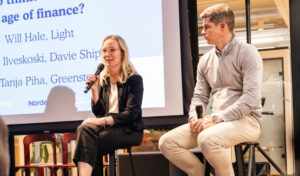
Minna Ilveskoski and Will Hale
The new age of finance: scale yourself, not just your team
The final conversation, moderated by Greenstep partner Tanja Piha, brought together Minna Ilveskoski, CFO of Davie Shipyards in Finland, and Will Hale of Light, an AI-native ERP and finance platform. The question was what it takes from finance when a company aims for rapid growth.
Growth arrives first as complexity. Davie Shipyards in Finland aims to grow its revenue tenfold in five years. Ilveskoski explained that growth first shows up as more orders, more projects and more people. The first priority is visibility and transparency, and that comes down to people and processes before tools. As the company moves from building one vessel at a time to running multiple projects in parallel, new people join procurement, supply chain and engineering. Everything they do ends up in the numbers, so scaling finance is a company-wide effort.
The CFO has to scale too. In an early-stage company, the CFO may approve everything from invoices to payroll. As the company grows, that becomes a bottleneck. Ilveskoski’s advice is to look in the mirror, define clear roles, give the team a real mandate and build ownership, while adding the controls that growth requires. Her advice for anyone building a finance function is to start early: design processes, recruitment plans and tools before growth arrives, because it tends to arrive fast.
Decide what people are for. Hale argued that finance headcount no longer needs to grow in line with revenue. Companies should start by defining what they want people to do – exercise judgment, think commercially, add value to the business – and let AI agents take over manual work such as chasing invoices, expenses and reimbursements. He described a Light customer scaling revenue tenfold with three people in finance and around 100 AI agents, and noted that ERP implementations that once took a year or more can now take around 11 weeks.
Finland is ahead. Hale also had encouraging words for the audience: Finnish companies adopt finance technology faster than their European peers. It is not doom and gloom – Finland is leading the charge in the Nordics.
Build for the company you are becoming. Hale’s advice was to ask where you want to be in two years and put systems in place that will get you there, rather than scaling a growing business on decades-old technology and migrating later. The goal is to free the CFO to be commercial. With access to all of the numbers and the story of the business, the CFO can be the most influential person in the company after the CEO.
Five lessons for scaling CFOs
Across all three conversations, the same lessons kept coming back:
- Start early. Build investor relationships, leadership hires, processes and systems before you urgently need them. When growth or a funding need arrives, it arrives fast.
- People before tools. Whether evaluating an acquisition, building a finance team or choosing technology, the right people and clear ownership come first.
- Know what the money and the effort are for. A clear answer to “this will bring us to…” drives better capital strategies, better M&A decisions and better system choices.
- Free finance for judgment. Let technology and AI agents handle routine work, so people can focus on judgment, empathy and common sense – the things AI does not do.
- Step into the strategic role. The CFO sees the whole business and all of its numbers. Scaling yourself, not just your team, is what turns that position into influence.
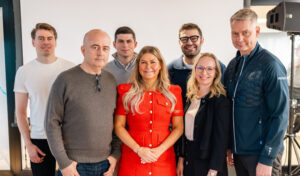
CFO Bites brought finance leaders together for candid conversations about the questions that matter most to growing companies. Thank you to all speakers, moderators and participants, and to our co-organisers, the Finnish Startup Community and Nordea, and to Sievo for hosting us.